






 For Immediate Release
By: Charles Blatcher, III
Chairman, National Coalition of Black Veteran Organizations
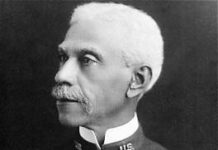
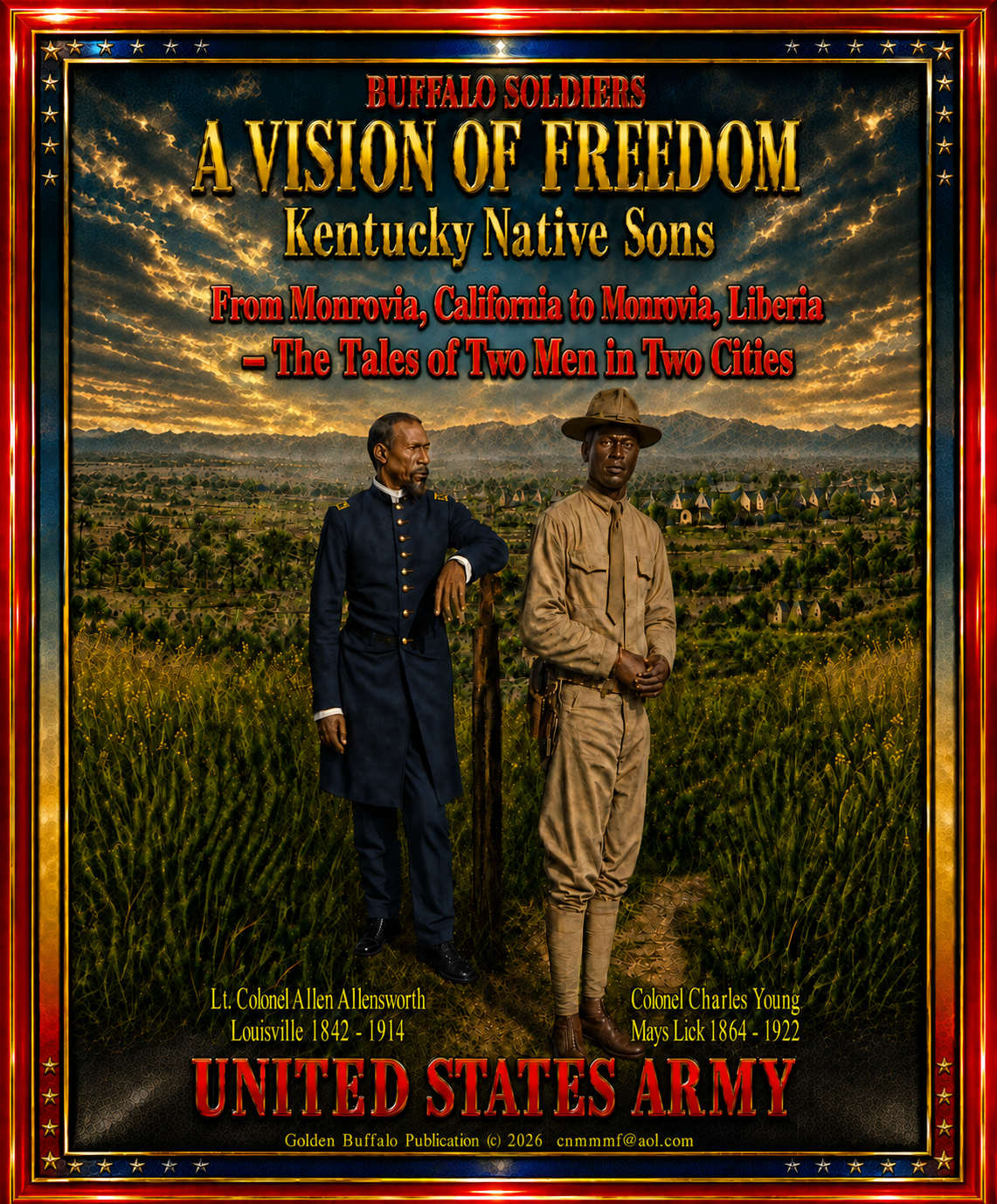
Lieutenant Colonel Allen Allensworth and Brigadier General Charles Young were pioneering Army officers whose lives reveal remarkable similarities. Although they belonged to different generations and followed different military paths, both men overcame slavery’s legacy, institutional racism, and limited opportunities to become the highest-ranking Black officers in the United States Army during their respective periods.
Both men were born in Kentucky. Allen Allensworth was born enslaved in Louisville in 1842. Charles Young was born in Mays Lick in 1864 to parents who had been enslaved. Education became central to both men’s lives. Allensworth defied laws and customs that prohibited enslaved people from learning to read, while Young endured racial isolation and hostility to graduate from the United States Military Academy at West Point in 1889—the third African American to do so.
Both men understood military service as more than a profession. They used their positions to advance the dignity, education, and opportunities of African Americans. Allensworth served as a chaplain and educator with the 24th Infantry, one of the Army’s Buffalo Soldier regiments. He developed educational programs for enlisted soldiers and retired in 1906 with the rank of lieutenant colonel. The Army recognizes that he had attained the highest rank then held by an African American officer.
Young served with the 9th and 10th Cavalry and the 25th Infantry—three of the Army’s historic Black regiments. He became the first African American Regular Army officer to achieve the ranks of major, lieutenant colonel, and colonel. Like Allensworth, Young was the senior-ranking Black officer of his era. Both men demonstrated that Black officers could lead effectively at the highest levels, despite serving in an Army that remained officially segregated.
Their leadership extended beyond the traditional military sphere. Allensworth helped establish the town of Allensworth, California, as a self-governing community where African Americans could own property, pursue education, establish businesses, and live with dignity. Young served as a military attaché in Haiti and Liberia, representing the United States abroad while assisting nations of the African Diaspora. Both men therefore connected military leadership with a larger vision of racial advancement and self-determination.
California also occupies an important place in both stories. Allensworth founded the community that bears his name in California’s Central Valley. Young became the first African American superintendent of a national park when he commanded the troops responsible for protecting and improving Sequoia National Park in 1903.
The most unusual connection between their final chapters involves two cities named Monrovia, located on opposite sides of the world. Allensworth was fatally injured after being struck by a motorcycle while stepping from a streetcar in Monrovia, California, in September 1914. Young’s final assignment was associated with Monrovia, Liberia, where he was serving as United States military attaché. For historical precision, Young did not die in Monrovia itself; he became ill while conducting duties in West Africa and died in Lagos, Nigeria, on January 8, 1922. Nevertheless, Monrovia, Liberia, was the center of his final mission and the place most closely connected with his service at the time of his death.
Thus, the two Monrovias provide a powerful symbolic bridge between their lives: Allensworth’s final journey ended in Monrovia in the American West, while Young’s final service began from Monrovia on the West African coast. One devoted his later years to building an independent Black community in America; the other devoted his final years to strengthening an independent Black republic in Africa.
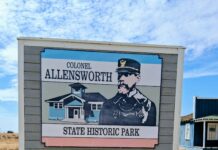
Their legacies also received greater recognition after their deaths. In California Colonel Allensworth State Historic Park preserves the community and vision established by Allensworth. In 2022, one hundred years after Young’s death, the United States Army granted him an honorary posthumous promotion to brigadier general. Young’s promotion advocacy was spearheaded by the California based National Coalition of Black Veteran Organizations.
Together, Allen Allensworth and Charles Young represent successive chapters in the struggle of Black military officers for recognition, command responsibility, and equality. Their lives were separated by a generation, but united by Kentucky origins, Buffalo Soldier service, educational leadership, racial advancement, historic military achievement—and an extraordinary connection to two cities named Monrovia.
On October 10, 2026, the California State Park Department will host the 50th Re-dedication Ceremony of Colonel Allensworth State Historic Park in Tulare County, California. In connection with this historic observance, the National Coalition of Black Veteran Organizations has called upon Governor Gavin Newsom to grant Lieutenant Colonel Allen Allensworth an honorary posthumous promotion to the rank of brigadier general in the California National Guard. The Coalition hopes the promotion will be granted and formally recognized during the re-dedication ceremony as a fitting tribute to Allensworth’s distinguished military service, pioneering leadership and enduring contributions to California and the nation. Plans are also underway to request that Kentucky Governor Andy Beshear grant Allensworth, a native of Louisville, a similar honorary posthumous promotion in the Kentucky National Guard. Governor Beshear was a leading force in helping secure the federal honorary posthumous promotion of then-Colonel Charles Young to the rank of brigadier general in the United States Army. The Coalition is encouraging veterans from throughout California, as well as members of the public, to attend this historic Re-dedication ceremony. Admission is free.
RSVP by Sept. 25 to Lori.Wear@parks.ca.gov or Russ.Dingman@parks.ca.go
Coalition email: cnmmmf@aol.com